Of all the painting projects around a house, the front door offers the most visual change for the least surface area. It's the focal point of the facade, the first thing guests touch, and one of the few places on a house where a bold color usually looks intentional rather than out of place.
It's also easy to get wrong. A color that looks great on a sample card can clash with brick, fight with the shutters or fade quickly in afternoon sun. Here's how to think through the choice.
Start with what you can't change
Before looking at paint swatches, look at the parts of your house that will stay as they are. Roofing, brick, stone, and in many cases the siding are fixed elements, and the door color has to work with them.
Notice their undertones. Brick might lean orange, red or pink. Asphalt shingles can read warm brown or cool gray. Vinyl siding colors have their own warm or cool cast. A door color that shares the same undertone family will feel settled; one that fights it will feel off even if it's hard to say why.
Contrast or harmony
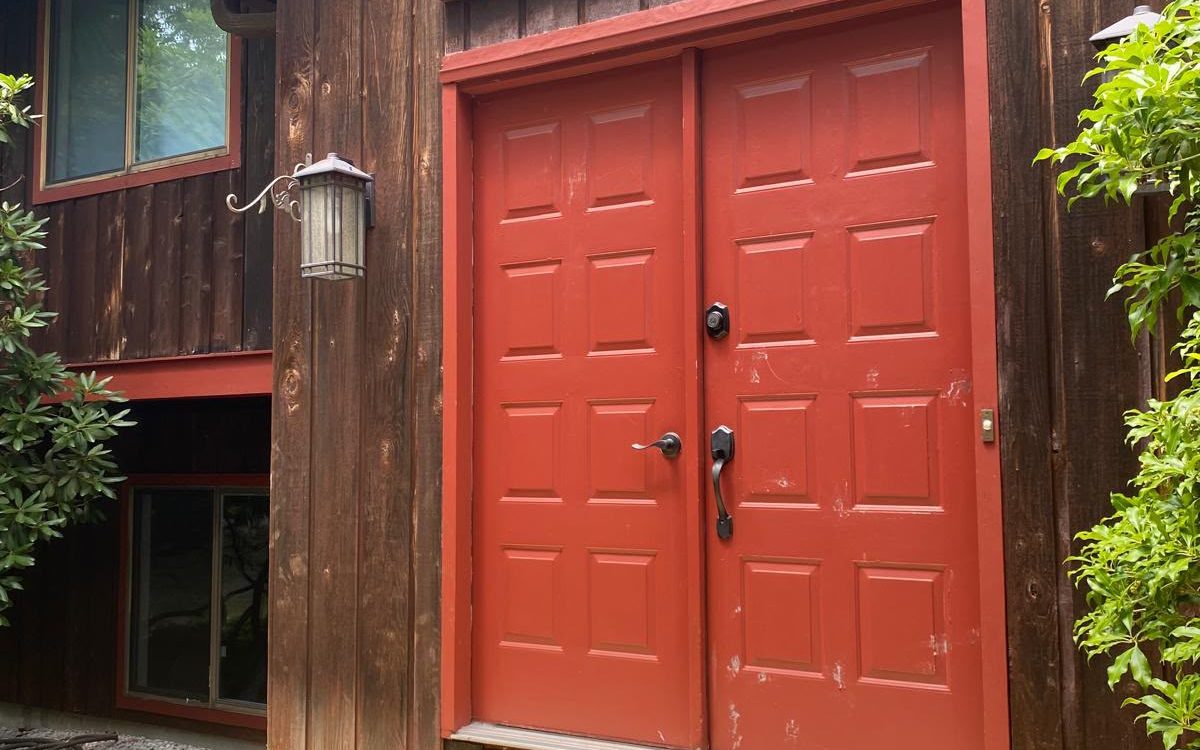
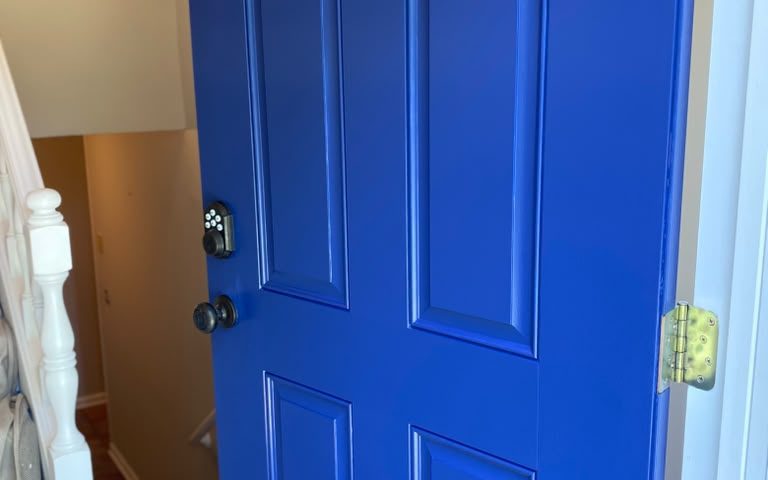
There are two basic approaches. A contrasting door stands out from the house: a deep red against gray siding, or a bright blue against white clapboard. A harmonious door stays within the same color family as the house, often a darker shade, for a more understated, tailored look.
Contrasting colors make the entry obvious from the street and give the facade energy. Harmonious colors can make a house feel calm and cohesive. Neither is better; it depends on the house and on the impression you want it to make.
Let the architecture guide you
The style of a home narrows the field in helpful ways. In the Waterbury area, a few house types are especially common, and each has colors that tend to feel right.
Colonials and Capes
Classic New England homes suit traditional, saturated colors: deep red, black, navy, forest green and rich burgundy. These colors have historic roots and pair well with white or cream trim.
Victorians and multi-family homes
Older homes with detailed trim, including the multi-family houses common in Waterbury neighborhoods, can carry more adventurous colors, especially if the trim already uses several shades.
Contemporary and ranch homes
Cleaner, simpler designs often look best with modern choices: charcoal, black, slate blue, or a single bright accent color used confidently.
Account for light and direction
The direction your door faces changes how color looks and how long it lasts. North-facing entries get indirect light all day, which tends to make colors appear cooler and darker. South- and west-facing doors get strong sun that warms colors and fades them faster.
Dark colors on doors in full sun absorb a lot of heat. On storm-door setups, heat can build up between the storm door and the entry door, so check the manufacturer's guidance before choosing a very dark color in that situation.
Weather exposure matters as much as sunlight. A door under a deep porch roof is sheltered from rain and direct sun, and almost any color and sheen will last well there. A door that sits flush with the facade and faces the prevailing weather takes much more abuse, and it's worth choosing a high-quality exterior enamel and planning for more frequent upkeep.
Consider how the color will look at night, as well. Under a warm porch light, cool blues and grays can shift noticeably, while reds and greens tend to hold their character. Step outside after dark with your sample board before making a final decision.
Coordinate the details
A door doesn't stand alone. The hardware, house numbers, light fixture and even the doormat all contribute to the entry. Brass and warm metals look natural with deep reds, greens and navy. Matte black hardware works well with lighter doors and modern palettes. Brushed nickel and chrome suit cooler colors.
Shutters are a common question. The door can match them for a coordinated look, or contrast with them so the door is the sole accent. Matching works well on symmetrical colonials; contrasting can highlight the entry on an asymmetrical facade.
Don't forget the frame, trim and storm door
The door slab gets the attention, but the surrounding trim decides whether the color looks finished. Freshly painted casings, a clean threshold area and a repainted storm door frame can make a new door color look intentional rather than dropped into an older entry.
Most homeowners keep the trim around the door in the same color as the rest of the house trim, which lets the door stand out on its own. Another option is to paint the casing a deeper version of the trim color, framing the entry without competing with the door itself.
If your entry has a storm door, decide whether it should match the door, match the trim or disappear into the siding. A glass storm door that matches the trim tends to keep the focus on the door behind it. Also check the storm door's weatherstripping and closer while you're making changes; a fresh color loses some of its impact if the storm door rattles or sags.
Finally, take a look at the details: the mailbox, the kick plate, the light fixture and the doorbell. Swapping one or two of these at the same time as the paint can complete the transformation for a modest cost.
Test before you commit
Paint a large sample on poster board and tape it to the door. Look at it in the morning, at midday, and in the evening, and look from the street as well as from the walk. Colors that look perfect on a small chip often appear brighter and more intense across a full door.
Narrow your list to two or three options, then choose the one you still like after a few days. A front door is easy to repaint, but it's still worth getting right the first time.
Finish and durability
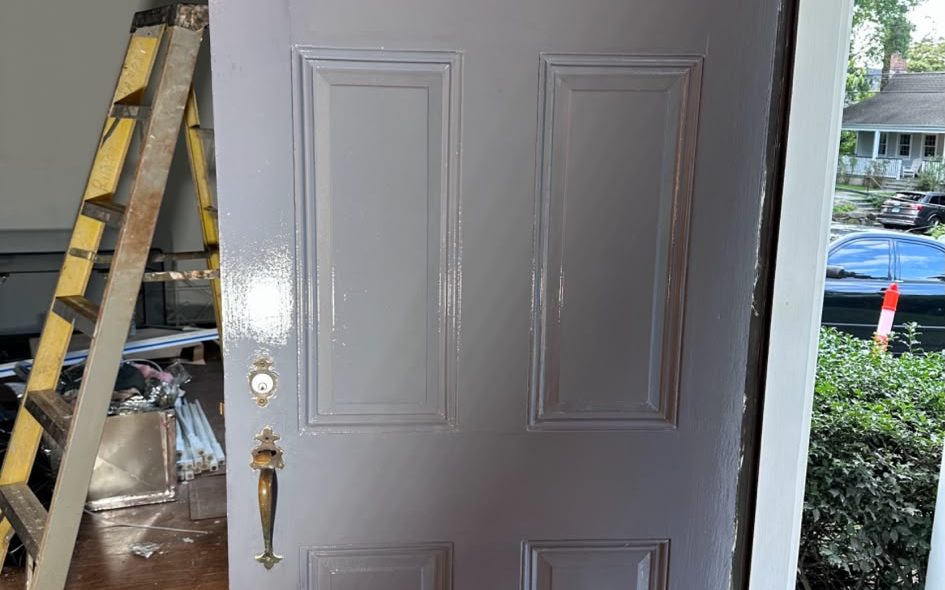
Exterior doors need coatings rated for exterior exposure. Satin and semi-gloss are the most common choices because they clean easily and resist weather. High-gloss can look striking and polished, but it highlights every flaw in the surface, so careful sanding and preparation become even more important.
Front doors should be painted on a dry day within the product's temperature range, and the work planned so the door can be closed and locked by evening. If you're in Waterbury, Prospect, Wolcott or nearby and want help choosing a color or getting a smooth, durable finish, we're glad to bring samples and talk through the options at your door.
Questions about this topic
Black, deep red and navy remain enduringly popular because they work with many siding colors. The best choice still depends on your home's fixed materials and style.
It can. Matching creates a coordinated, traditional look, while a contrasting door makes the entry the single focal point. Both approaches work when the colors share undertones.
It depends on exposure. Doors that face strong sun or harsh weather show wear sooner. Inspecting the finish each spring helps you catch fading or chipping early.
Related services

Written by the Brightline Painting team
We're residential painters based in Waterbury, Connecticut, with more than ten years of experience and over one hundred completed projects. Front door colors are one of our favorite conversations, and these are the points we walk through with clients. More about us.