Ask ten homeowners when to paint a house and most will say summer. That's not wrong, but it's incomplete. Exterior paint doesn't care about the month on the calendar; it cares about temperature, moisture and sunlight on the day it's applied and the days that follow. In Connecticut, those conditions shift quickly, and a forecast that looks fine at breakfast can turn into a damp evening that ruins a fresh coat.
This guide explains what actually matters when scheduling an exterior paint job in the Waterbury area, how the seasons tend to play out here, and what you can do to make sure your project lands in the best possible window.
Why timing affects how long paint lasts
Paint is applied wet, but its job is to form a continuous, flexible film as it dries and cures. If that process is interrupted, the film ends up weaker than it should be. Cold slows the chemical process that lets latex particles fuse together. Moisture from rain, fog or dew can leave surfactant streaks, cause poor adhesion, or simply wash fresh paint off a wall. Intense direct sun can make paint skin over too fast, trapping solvent and leaving lap marks.
None of these problems show up on day one. A coat that cured badly often looks perfect for a season, then begins to chalk, crack or peel sooner than expected. That's why scheduling deserves as much thought as color selection.
The numbers that matter
Every exterior product lists its application conditions on the label and technical data sheet. These ranges vary by manufacturer and product line, so always check the specific paint being used. In general terms, three measurements guide our scheduling.
Air and surface temperature
Many standard exterior latex paints call for temperatures of about 50°F and above, while some newer formulas are rated for application in the mid-30s. The surface temperature matters as much as the air. A north-facing wall in the morning can be noticeably colder than the air around it, and a dark south-facing wall in July can be far hotter.
Humidity and dew point
Fresh paint needs to dry before moisture settles on it. When the surface temperature drops close to the dew point in the evening, condensation forms on the siding. Paint applied late in the afternoon on a cool day can be wet with dew before it has set, which is one of the most common causes of streaking.
Rain in the forecast
Most products need several dry hours after application before rain can hit them. We look at hourly forecasts rather than daily summaries, because a ten-percent chance of showers at four o'clock is a very different risk than the same chance at midnight.
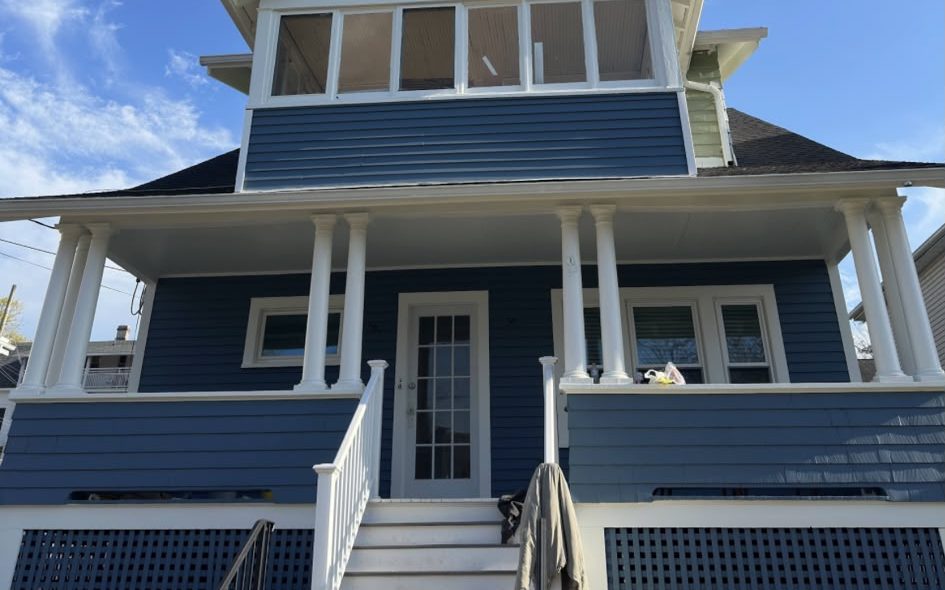
How the seasons play out around Waterbury
The Naugatuck Valley sits inland, away from the moderating effect of Long Island Sound, so its swings between warm days and cool nights are often sharper than on the shoreline. That shapes when exterior work makes sense.
Spring
Late April and May can bring warm afternoons, but nights are still cold and rain is frequent. Spring is a good time for inspections, estimates and scraping, and on stable stretches of weather, for painting too. Wood siding that's been wet all winter also needs time to dry before it's coated.
Summer
June through August offers the longest workdays and the most dependable temperatures. The trade-off is heat and humidity. We start on walls after the morning dew burns off, avoid painting surfaces in full midday sun, and follow the shade around the house.
Early fall
September and early October are often the best painting weeks of the year: lower humidity, mild days and steadier weather. The catch is shortening daylight and colder nights, which means stopping earlier each afternoon so paint has time to set before the dew arrives.
Late fall and winter
From late October onward, painting the full exterior becomes difficult in most years. Small repairs, a front door or a protected porch can sometimes be done on mild days with low-temperature products, but large projects are usually better scheduled for the following season.
Booking ahead without rushing
Because the reliable window is limited, exterior calendars fill up. Homeowners who request estimates in late winter or early spring have the most flexibility in choosing start dates. That doesn't mean a project should be rushed into marginal weather to keep a schedule. A short delay for a better forecast costs far less than repainting a wall that failed early.
It also helps to think about what else is happening at the house. Roof work, gutter replacement and window installation should generally come before painting, since they disturb trim and siding. Pressure washing, if it's part of the plan, needs drying time before primer goes on.
Getting the house ready before the crew arrives
A little preparation on your side helps the project move smoothly once the weather cooperates. Trim back shrubs and branches that touch the siding so the crew can reach every surface and so leaves don't brush against wet paint. Move patio furniture, grills, planters and decorations away from the walls, and take down anything hanging on the exterior such as wreaths or flags.
It also helps to think about access. Let us know where cars will be parked, whether pets will be outside during the day, and which spigot and outdoor outlet we can use. If you have an irrigation system, turn off the zones closest to the house for the duration of the project so freshly painted walls don't get sprayed in the early morning.
Signs your exterior can't wait another year
Some paint problems are cosmetic and can ride out another season. Others mean water is already getting where it shouldn't. Prioritize the project if you notice any of the following.
- Bare wood showing on sills, trim or the lower courses of siding
- Caulk that has pulled away from corner boards and window casings
- Paint peeling in sheets rather than fine flakes
- Soft spots when you press on trim with a screwdriver
- Dark staining or mildew that returns quickly after cleaning
Bare wood absorbs water every time it rains and dries out every time the sun comes out. That constant cycling is what splits boards and opens joints, so even a partial repaint of the worst-exposed walls can buy valuable time.
How we handle weather on your project
Before any exterior job starts, we confirm the product's application range and look at the hourly forecast for the days ahead. On the job, we start each wall when it's dry and within temperature, sequence the work so fresh paint isn't sitting in direct afternoon sun, and stop early when evening conditions threaten the finish. If the weather turns, we reschedule instead of pushing through.
The result is a finish that cures the way the manufacturer intended, which is the single biggest factor in how long it lasts. If you're planning an exterior repaint in Waterbury, Watertown, Naugatuck or nearby, the best first step is an inspection to see what prep the house needs, so the timing can be planned around both the weather and the work.
Questions about this topic
Often, yes, especially early in the month on dry, mild days. Work has to stop earlier in the afternoon so the coat sets before evening dew, and low-temperature products can extend the window.
The siding needs to be dry to the touch and, for bare wood, dry beneath the surface. After a heavy rain that can mean waiting a full day or more, depending on sun and wind.
Painting a surface in strong direct sun can make paint dry too quickly, causing lap marks and reduced adhesion. Following the shade around the house avoids most of that risk.
Related services

Written by the Brightline Painting team
We're residential painters based in Waterbury, Connecticut, with more than ten years of experience and over one hundred completed projects. Exterior scheduling questions come up on nearly every estimate visit, so this guide collects what we tell homeowners. More about us.